
 The US Supreme Court ruled 5-4 June 3 in Maryland v. King that police may collect DNA samples from individuals arrested and charged with serious crimes. The respondent in the case, Alonzo King, challenged the validity of Maryland's DNA Collection Act after state officials used a DNA sample taken after a 2009 arrest on assault charges to implicate him in a 2003 rape. In an opinion by Justice Anthony Kennedy, the majority found that the warrantless DNA collection does not violate Fourth Amendment rights. Kennedy wrote:
 "The social sharing of a small amount of marijuana" by immigrants lawfully in the US does not require their automatic deportation, the Supreme Court ruled April 23. "Sharing a small amount of marijuana for no remuneration, let alone possession with intent to do so, does not fit easily into the everyday understanding of trafficking, which ordinarily means some sort of commercial dealing," Justice Sonia Sotomayor wrote for a seven-justice majority.
 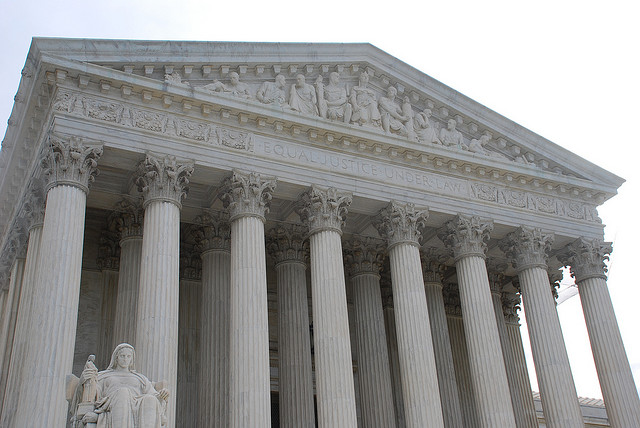 The US
 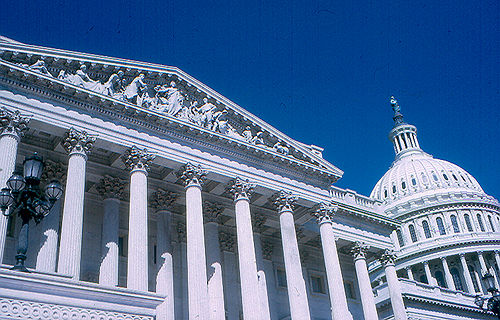 An odd irony has emerged around the pending Supreme Court decision on Obamacare. As
  This week, more than 12,000 people—85% of them Black—now serving time for crack cocaine offenses will have their sentences reviewed by a federal judge under terms of the
  The US Supreme Court ruled on May 23 to uphold an order requiring California to release up to 46,000 prisoners to remedy overcrowding in the state's prisons. The ruling in



Recent comments
11 weeks 6 days ago
12 weeks 2 days ago
20 weeks 3 days ago
21 weeks 4 days ago
22 weeks 2 days ago
27 weeks 4 days ago
34 weeks 2 hours ago
34 weeks 9 hours ago
37 weeks 1 day ago
38 weeks 9 hours ago