
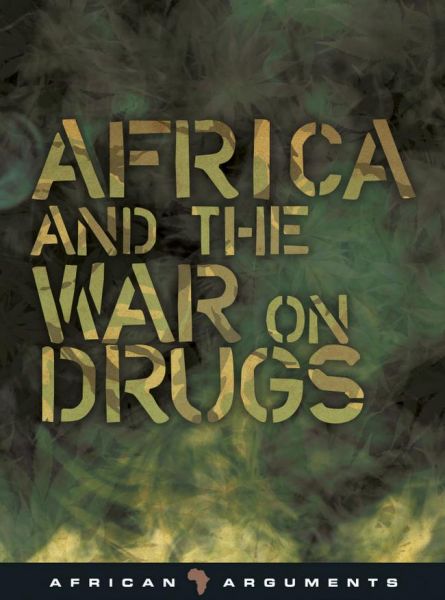
 For those who have been wondering what the truth is behind the media sensationalism about global cartels establishing Africa as their new theater of operations, Africa and the War on Drugs by Neil Carrier and Gernot Klantschnig (Zed Books, London, 2012) clears the air in a welcome way.
The authors, a pair of British academics, portray a strategy by the UN Office on Drugs and Crime (UNODC) to hype the threat and replicate the hardline policies pursued in Latin America and elsewhere on the African continent. Drug trafficking has definitely been growing in Africa in recent years—ironically, the authors argue, as a result of "successes" in Latin America. As the old cartels and their smuggling routes were broken up, new more fragmented networks have sought new routes and markets. This conveniently coincided with South Africa's reintegration to the world economy after the end of apartheid, and more generally with Africa's globalization.
 The most enlightened cannabis connoisseurs—those who still have a link back to the values that defined the hippie culture—tend to be conscious consumers when it comes to food or computers or whatnot. They may buy organic tomatoes, boycott Taco Bell to support exploited farm workers in Florida, and petition Apple about the brutal conditions in their Chinese assembly plants. But do they pay as much attention to the source of their preferred smoking herb?
 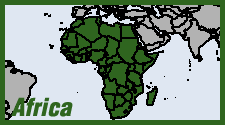 The Cape Flats, a sprawling poor area on the outskirts of Cape Town, has emerged as the epicenter of South Africa's crime crisis, the country's key transshipment point for dagga (cannabis), tik (cystal meth) and heroin. Long-simmering gang wars over control of the traffic exploded into horrific violence this year, leading to political stand-offs over how to respond. Western Cape province has called a special commission of inquiry into police actions in the conflicted township of Khayelitsha following charges that corrupt and aggressive policing has enflamed violence and led to vigilantism. But national Police Minister Nathi Mthethwa says the inquiry is illegal and exceeds provincial powers. In July, a request from West Cape Premier Helen Zille for military troops to patrol the Flats was turned down by President Jacob Zuma. By then, some 25 people, including seven children, had been killed in drug-related violence in the Flats over the past five months. (
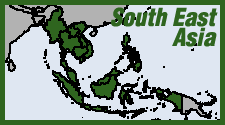 Six men accused of murdering 13 crew members of two Chinese merchant ships on the Mekong River last year pleaded guilty Sept. 20 at their trial in Kunming, capital of China's Yunnan province. The defendants included Naw Kham (also rendered Nor Kham), purportedly one of the most powerful warlords in the Golden Triangle opium-growing region that straddles the borders of Burma, Thailand and Laos. The crew were
 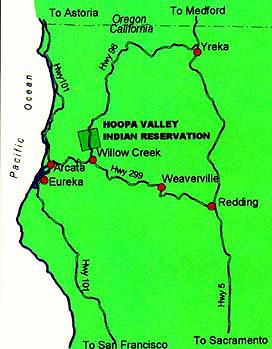 More than 26,000 cannabis plants from what authorities called a "sophisticated grow operation" were eradicated on Hoopa Valley tribal land in California's Humboldt County on Aug. 7. The Hoopa Tribal Police worked with the Sheriff's office, the Humboldt County drug task force, the Bureau of Indian Affairs, the US Marshals Office, the California Department of Justice Narcotics Enforcement, the Bureau of Land Management and the Campaign Against Marijuana Planting, according to a statement from the office of the sheriff. The
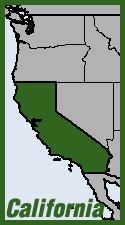
  Thanks to last year's redistricting, California now has a
 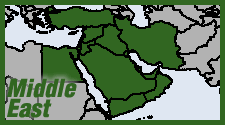 Iran on May 21 executed nine convicted drug traffickers at a Tehran prison. Seven of the men were hanged in connection with the confiscation of 500 kilograms of methamphetamine from a cargo ship bound for Southeast Asia, although Iranian media did not say when that seizure took place. The other two men were convicted of trafficking another 420 kilograms of the meth.
 Four Transportation Security Administration (



Recent comments
10 weeks 3 days ago
10 weeks 6 days ago
19 weeks 15 hours ago
20 weeks 1 day ago
20 weeks 6 days ago
26 weeks 1 day ago
32 weeks 4 days ago
32 weeks 4 days ago
35 weeks 5 days ago
36 weeks 4 days ago