
 While Canada's move to officially legalize cannabis has been hailed as courageous and historic by advocates around the world, some of the planet's most intolerant governments are reacting with dismay—even threatening to have their own citizens arrested if they indulge in legal marijuana on Canadian sovereign territory.

 Amid the seemingly endless hype about CBD, its once better-known sibling cannabinoid THC seems to increasingly languish in the shadows—both in terms of media attention and industry investment.
 Voters in several states will cast ballots on cannabis-related measures in the Nov. 6 midterm election. Michigan and North Dakota are facing general legalization measures, while Utah and Missouri voters will get to weigh in on medical marijuana.
 On the first day of legal cannabis in Canada, many suppliers ran out of stock—pointing to challenges in meeting demand. Several provincial governments and private outlets turned to e-commerce company Shopify to help negotiate the initial tsunami of online sales.
 Canada's postal unions are contemplating a nationwide walk-out—exactly as legal mail-order cannabis deliveries are set to begin. Talks are ongoing, but if the strike is not averted, cannabis consumers could be left high and dry—especially in those provinces that are relying mostly or entirely on home deliveries.
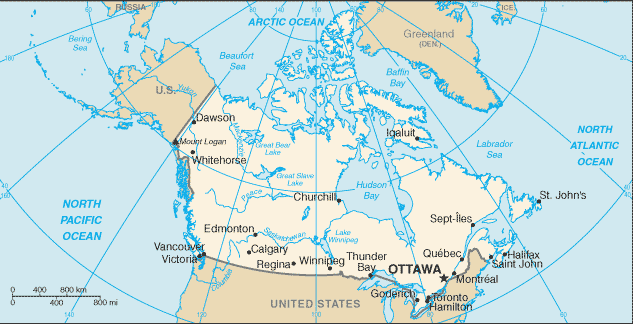 A major player in Canada's legal cannabis sector is seeking to acquire a troubled US-based company—the latest example of the trend toward consolidation in the industry now crossing international borders.
 Malaysia's surprise announcement that it will abolish the death penalty is a breakthrough for conservative Southeast Asia—and follows a global outcry over the death sentence meted out to a provider of medicinal cannabis oil. But will the reform come in time to save the life of Muhammad Lukman?



Recent comments
15 weeks 2 days ago
15 weeks 5 days ago
23 weeks 6 days ago
25 weeks 5 hours ago
25 weeks 5 days ago
31 weeks 11 hours ago
37 weeks 3 days ago
37 weeks 3 days ago
40 weeks 4 days ago
41 weeks 3 days ago