
 The police slaying of Keith Lamont Scott in Charlotte, NC, on Sept. 20 set off days of angry protests and riots, ultimately resulting in a midnight curfew and mobilization of the National Guard to the city's streets. Protests stayed peaceful the night of Sept. 24, although a group of clergy and demonstrators defied the curfew to hold a prayer vigil outside the Charrlotte-Mecklenburg police headquarters, ABC reported. The curfew was finally lifted the next night, but the city remains tense. Police have just released body and dahsboard video footage of the fatal incident.
 Amid a shameful paucity of media coverage, inmates at facilities in several states have organized work stoppages following a call for a nationwide prison strike to begin on Sept. 9—the anniversary of the 1971
  Researchers at Stanford University have developed a "potalyzer"—a device that can detect human THC levels, so cops can determine if a motorist is too impaired to drive. The hand-held device uses sophisticated bio-sensors to detect THC molecules in saliva. Police officers will supposedly be able collect a spit sample with a cotton swab and read the results on a smartphone or laptop in just three minutes.
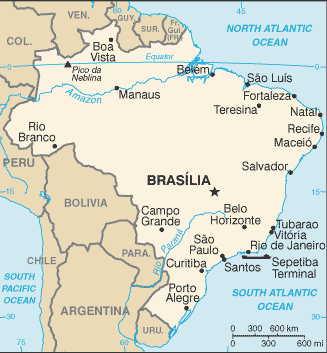 With the Rio de Janeiro Olympics over, the world media are moving on—but the city's poor favela dwellers are left to contend with a wave of murderous police terror. This was



Recent comments
10 weeks 6 days ago
11 weeks 2 days ago
19 weeks 3 days ago
20 weeks 4 days ago
21 weeks 2 days ago
26 weeks 4 days ago
33 weeks 2 hours ago
33 weeks 9 hours ago
36 weeks 1 day ago
37 weeks 8 hours ago