
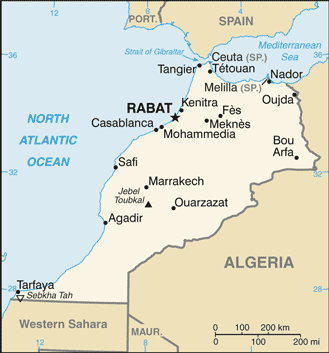
 Morocco’s King Mohammed VI has pardoned over 4,800 individuals who were convicted or wanted for illegal cannabis cultivation, the Ministry of Justice announced Aug. 19. The move comes as part of the country's ongoing transition toward a regulated cannabis economy. The royal pardon, granted to 4,831 people involved in cannabis-related cases, came on the eve of Morocco's Revolution Day, commemorating the 1953 uprising against French colonial rule.
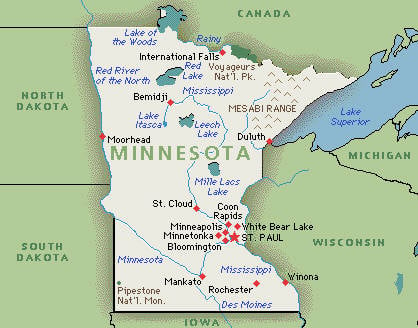 Cannabis is now legal in Minnesota, and the first adult-use sales have been on two of the state’s Native American reservations. The Red Lake and White Earth nations are using their sovereign status to get the jump on the North Star State's retail sector.
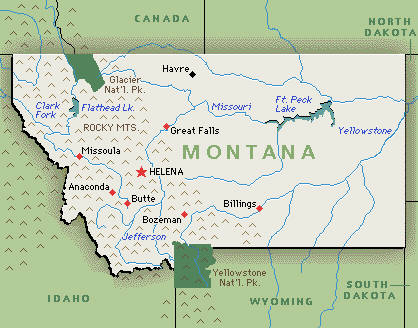 Montana this spring defeated the latest effort by anti-freedom forces to roll back legalization in Big Sky Country. And state policy has been tweaked to protect small operators, positioning this inland mountain realm to ride out the dilemmas impacting the cannabis industry on the West Coast.
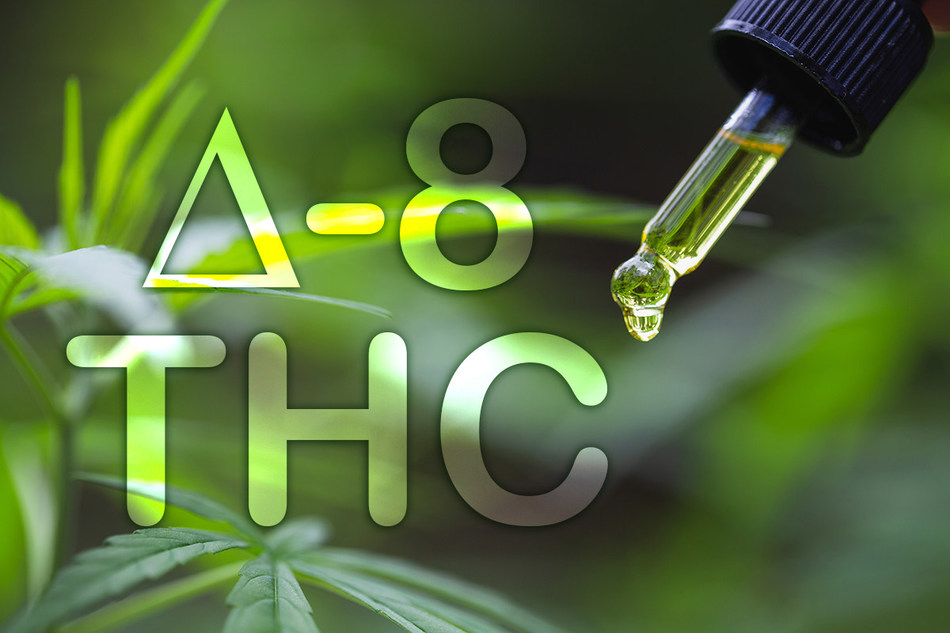 The legalization of hemp-derived cannabinoids by the 2018 Farm Bill has left a yawning regulatory gap that is being avidly exploited by purveyors of high-potency edibles and sketchy vape products.
 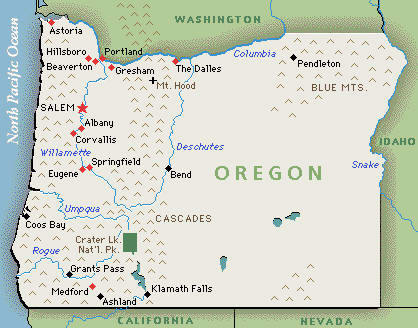 Industrial-scale illicit cannabis grow operations are being raided by police in Southern Oregon. Licit-market prices are totally depressed in Oregon, yet the illicit market continues to be evidently lucrative. What explains this contradiction, and what can be done?
 Hemp really did become a symbol of patriotism during the American Revolution, and was certainly grown by some of the Founders. But not all the stoner folklore checks out...
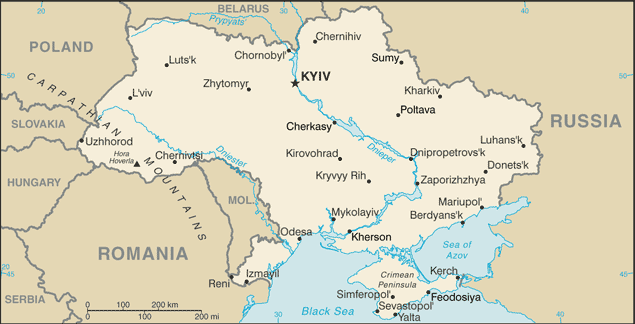 Ukraine has been suddenly thrust upon the center of the world stage, as Russia pours forces over the border in defiance of the West. In the atmosphere of militarization, space for cannabis and alternative culture is likely to close in both countries—but at least such space had been, slowly and tentatively, opening in Ukraine. Russia, pursuing an aggressive drug-war police state at home, may now be poised to impose its cultural-conservative agenda and roll back the recent gains in its smaller neighbor.
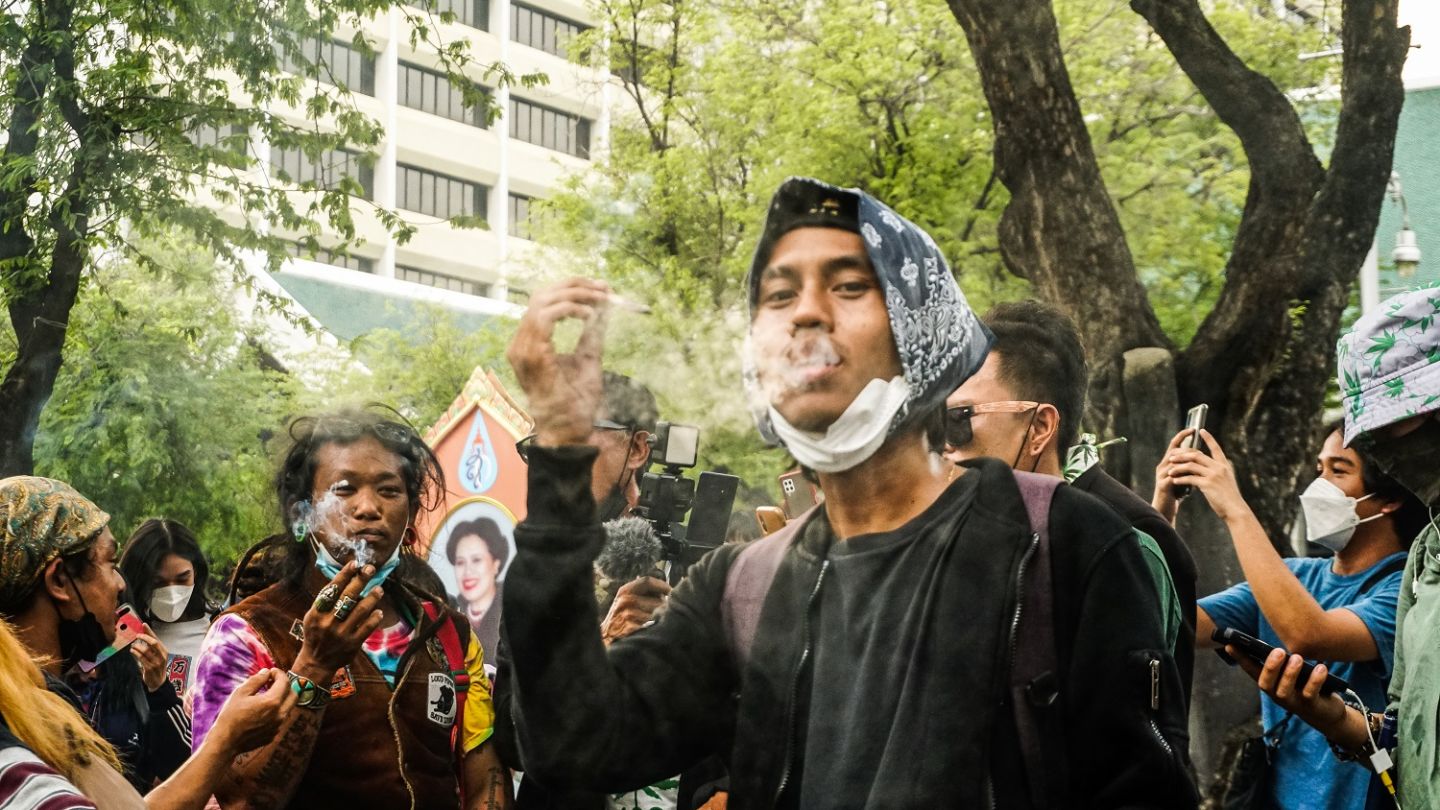 There is jubilation among cannabis advocates in Thailand after authorities announced a change to the narcotics code allowing personal cultivation—a breakthrough for the Asian continent. But does the reform really presage full legalization?



Recent comments
3 weeks 5 days ago
5 weeks 2 days ago
5 weeks 3 days ago
17 weeks 5 days ago
23 weeks 3 days ago
34 weeks 3 days ago
35 weeks 3 days ago
37 weeks 7 hours ago
37 weeks 3 days ago
37 weeks 5 days ago